CNS anatomy and physiology PowerPoint Template
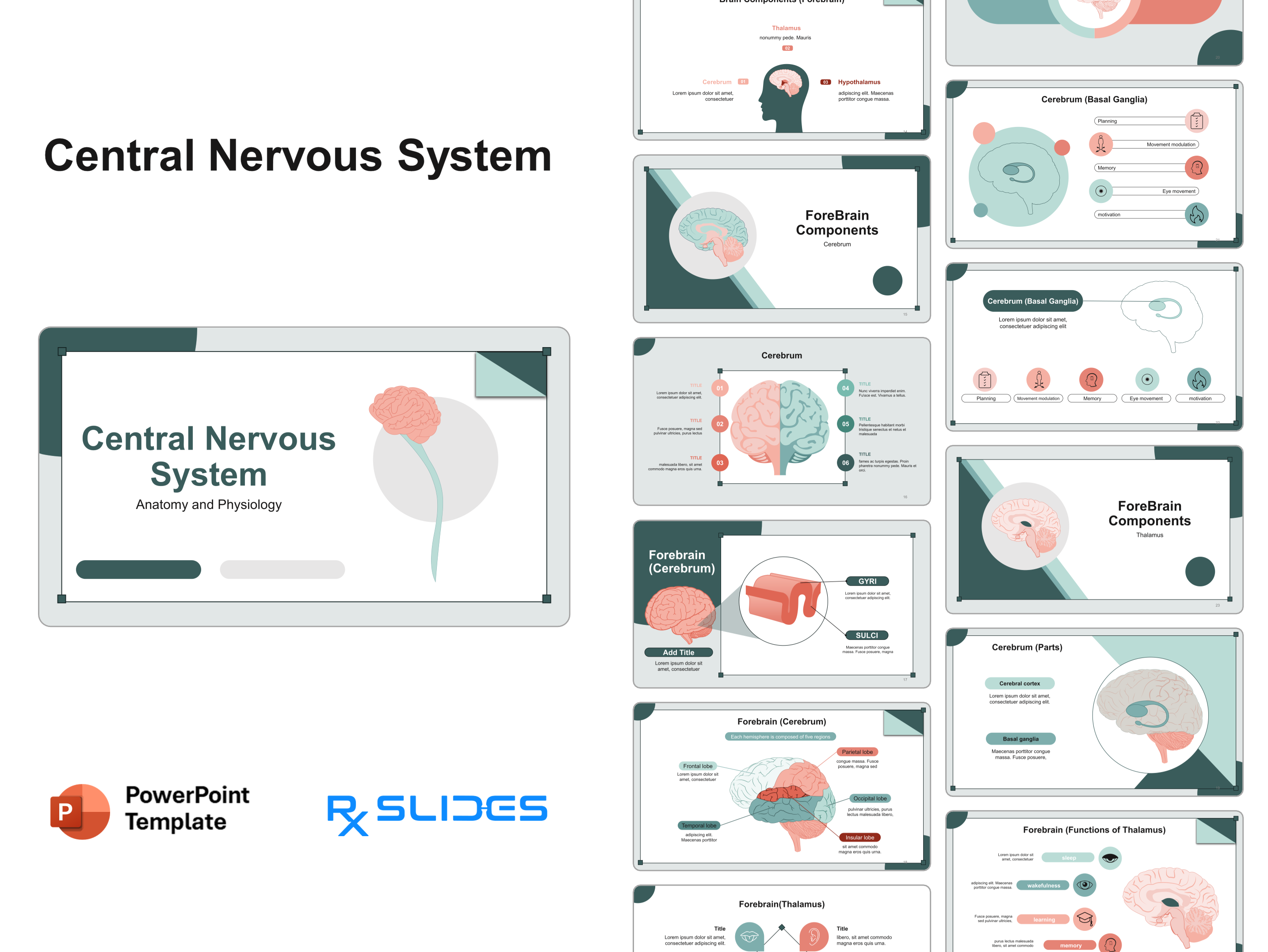
Central Nervous System (CNS) Presentation Template
Unlock the complexities of human neuroanatomy with this comprehensive Central Nervous System PowerPoint template. Designed for medical professionals, educators, and students, this 50-slide deck offers a scientifically accurate and visually immersive exploration of the brain and spinal cord. From the intricate pathways of the 12 cranial nerves to the specific functions of the forebrain, midbrain, and hindbrain, every slide utilizes high-quality medical illustrations, color-coded diagrams, and intuitive iconography. This template transforms dense neurological data into clear, engaging visual narratives, making it the perfect tool for lectures, clinical reviews, and patient education.
Featured Slides
Central Nervous System Overview
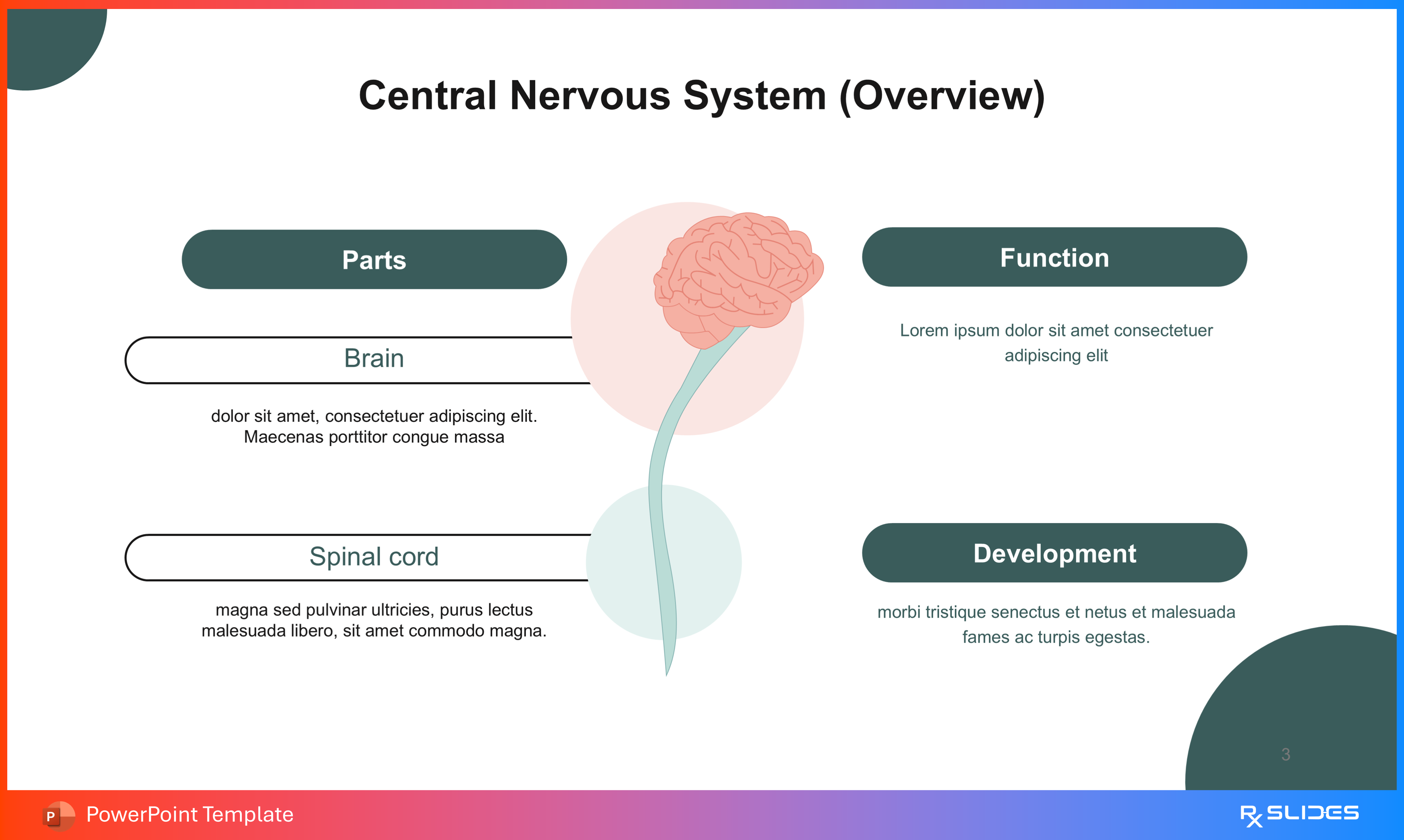
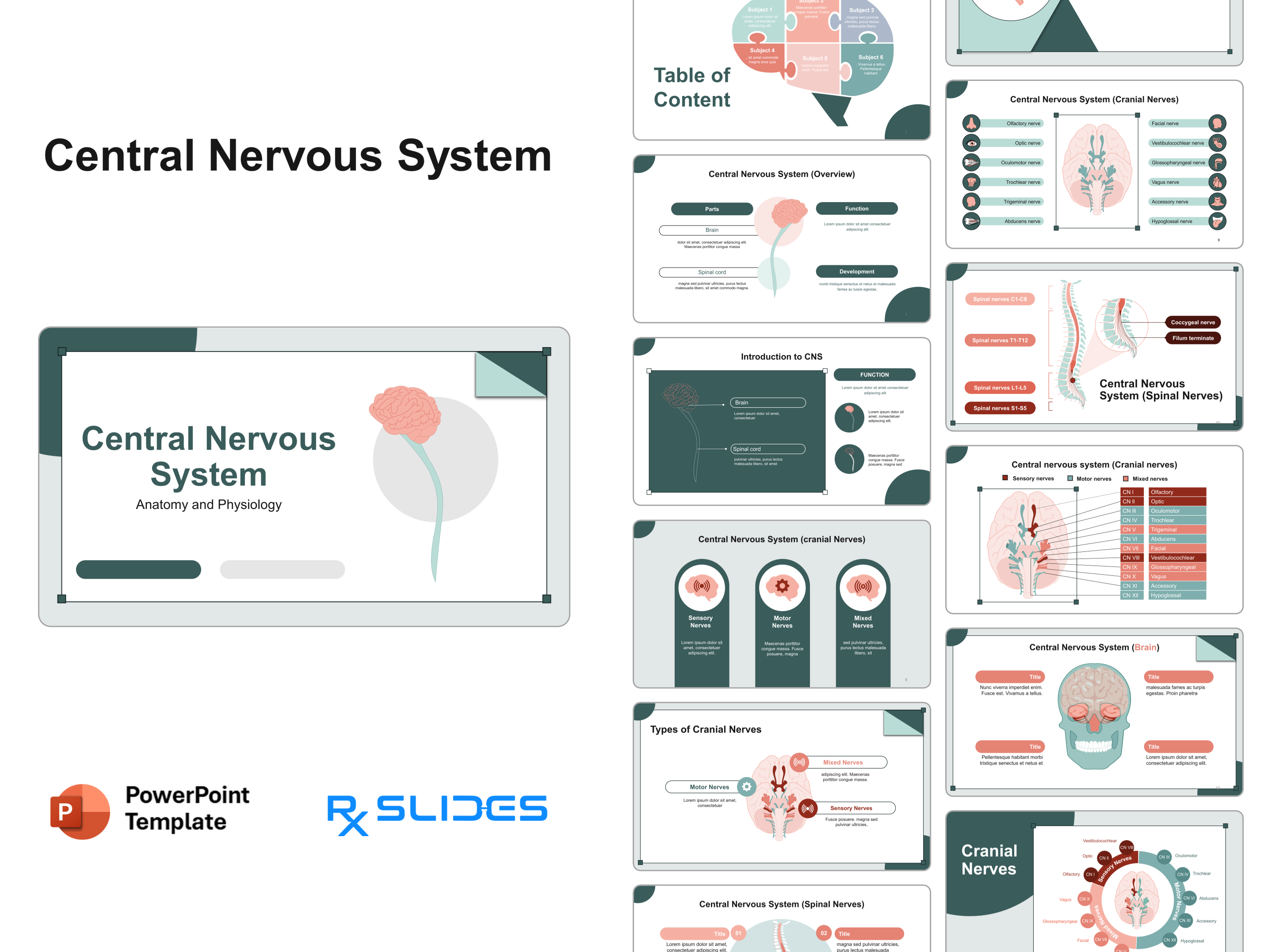
A foundational slide that presents the four main aspects of the CNS: parts, function, and development. It visually unites the structure and function elements using a central brain and spinal cord vector.
The 12 Cranial Nerves (Full Table)
.PNG)
A comprehensive reference slide listing all 12 cranial nerves (CN I-XII). It features a powerful visual link connecting the anatomical location of each nerve on a brain diagram directly to its functional category in an organized table.
Spinal Nerves Segmentation
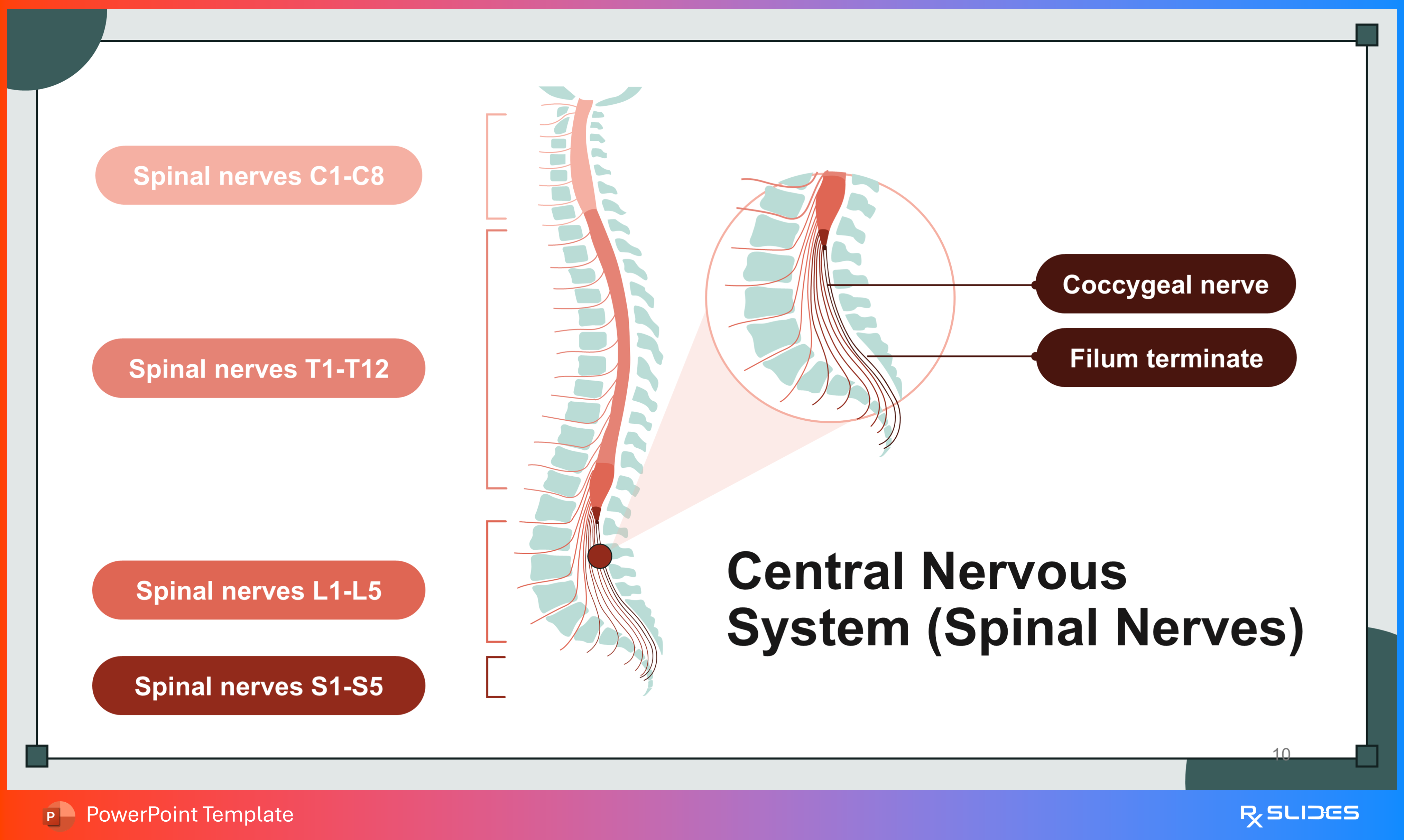
This slide visualizes the four main segments of the spinal nerves. A detailed spinal column illustration uses color-coded bars to link anatomical locations to the cervical, thoracic, lumbar, and sacral nerve groups.
Cerebrum Regions (Lobes)
.PNG)
An essential anatomical guide illustrating the five primary regions of the cerebrum. It clearly labels and color-codes the frontal, parietal, temporal, occipital, and the often-overlooked insular lobes.
Basal Ganglia: Core Functions
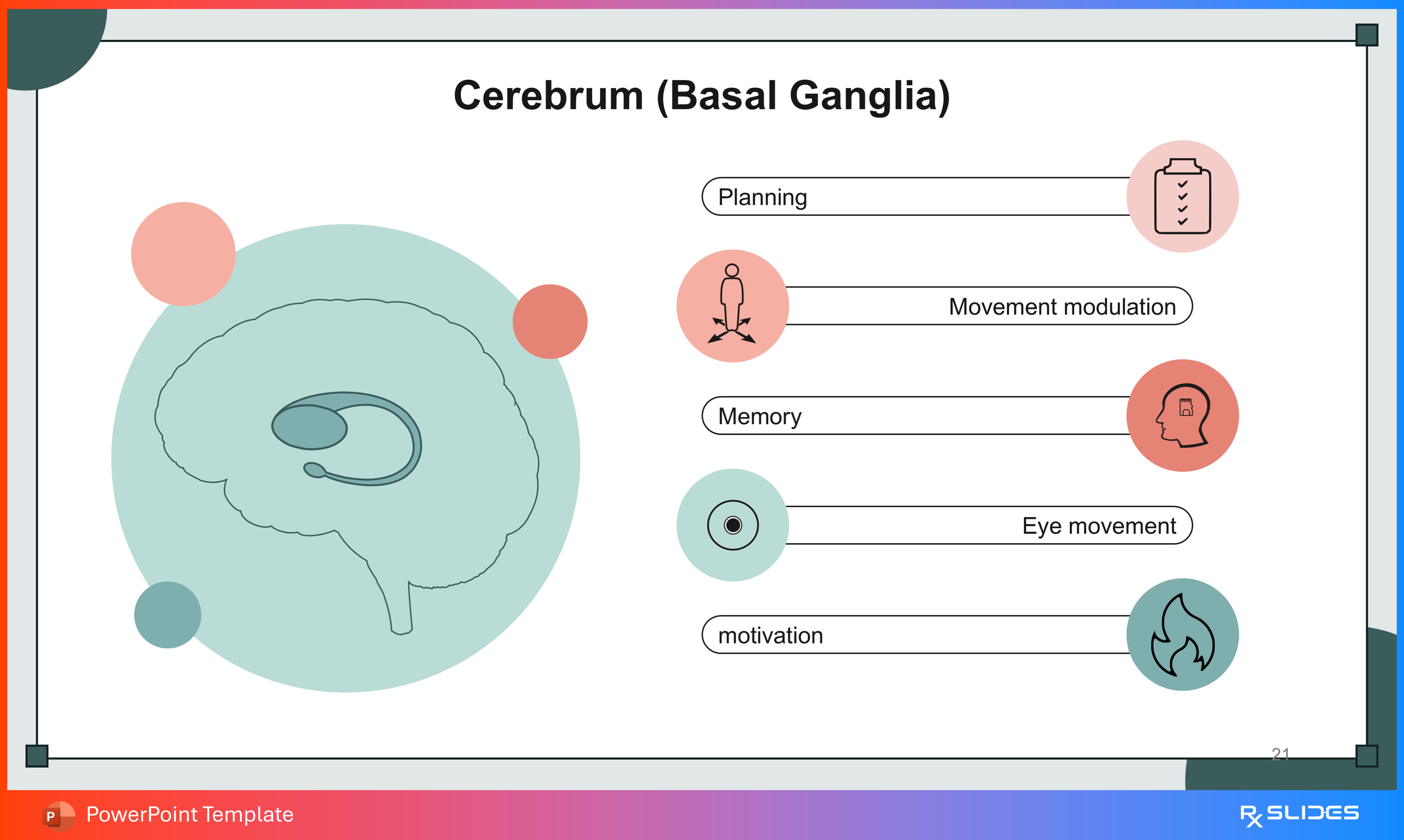
This slide details the major roles of the basal ganglia, such as planning, movement, and motivation. It utilizes a visual pathway connecting the central brain illustration to distinct, icon-based content bubbles for clarity.
Thalamus: Key Roles
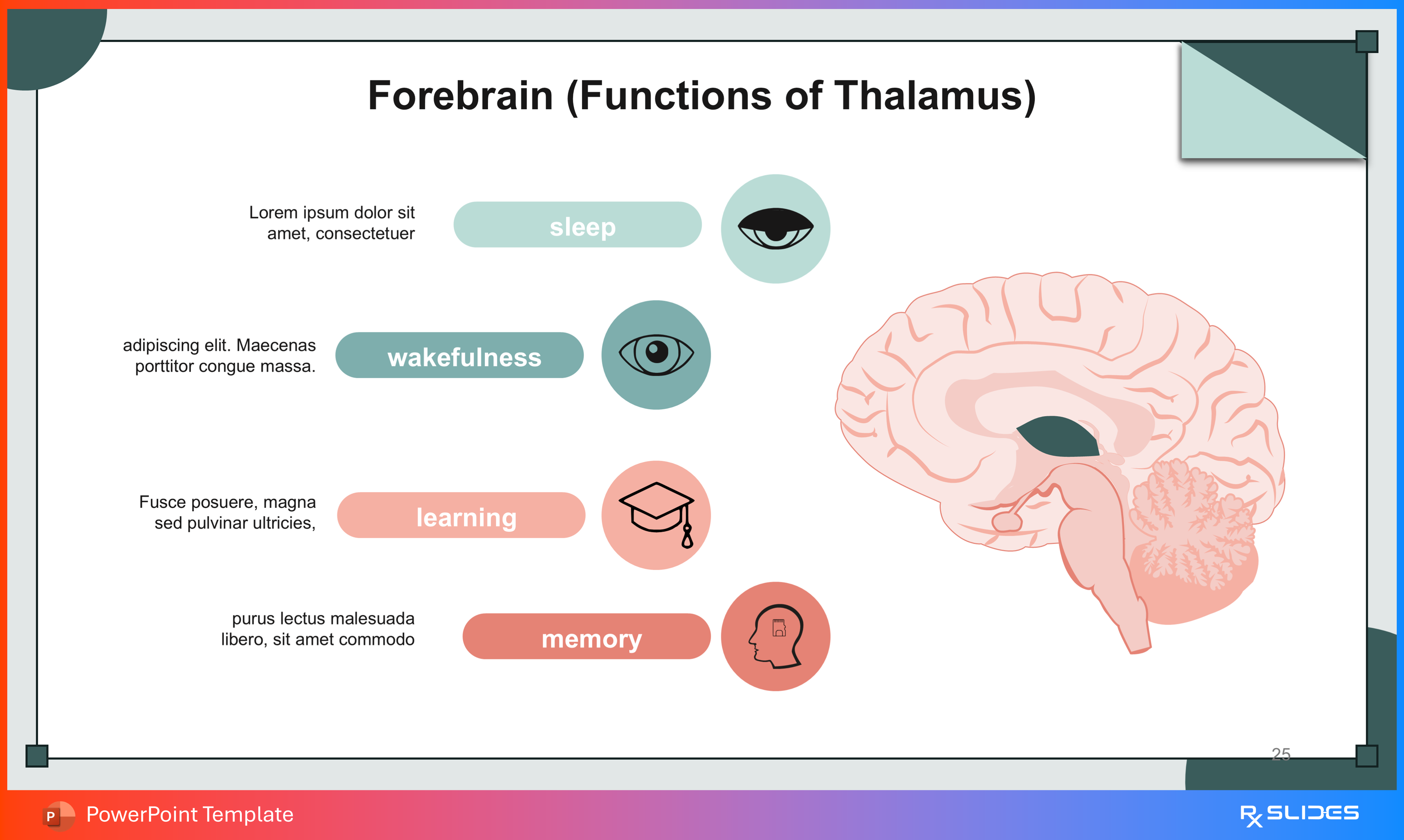
Defines the critical functions of the thalamus as the brain's relay station. The design organizes information into four distinct content boxes, covering roles such as motor activity and sensory processing.
Hypothalamus Functions
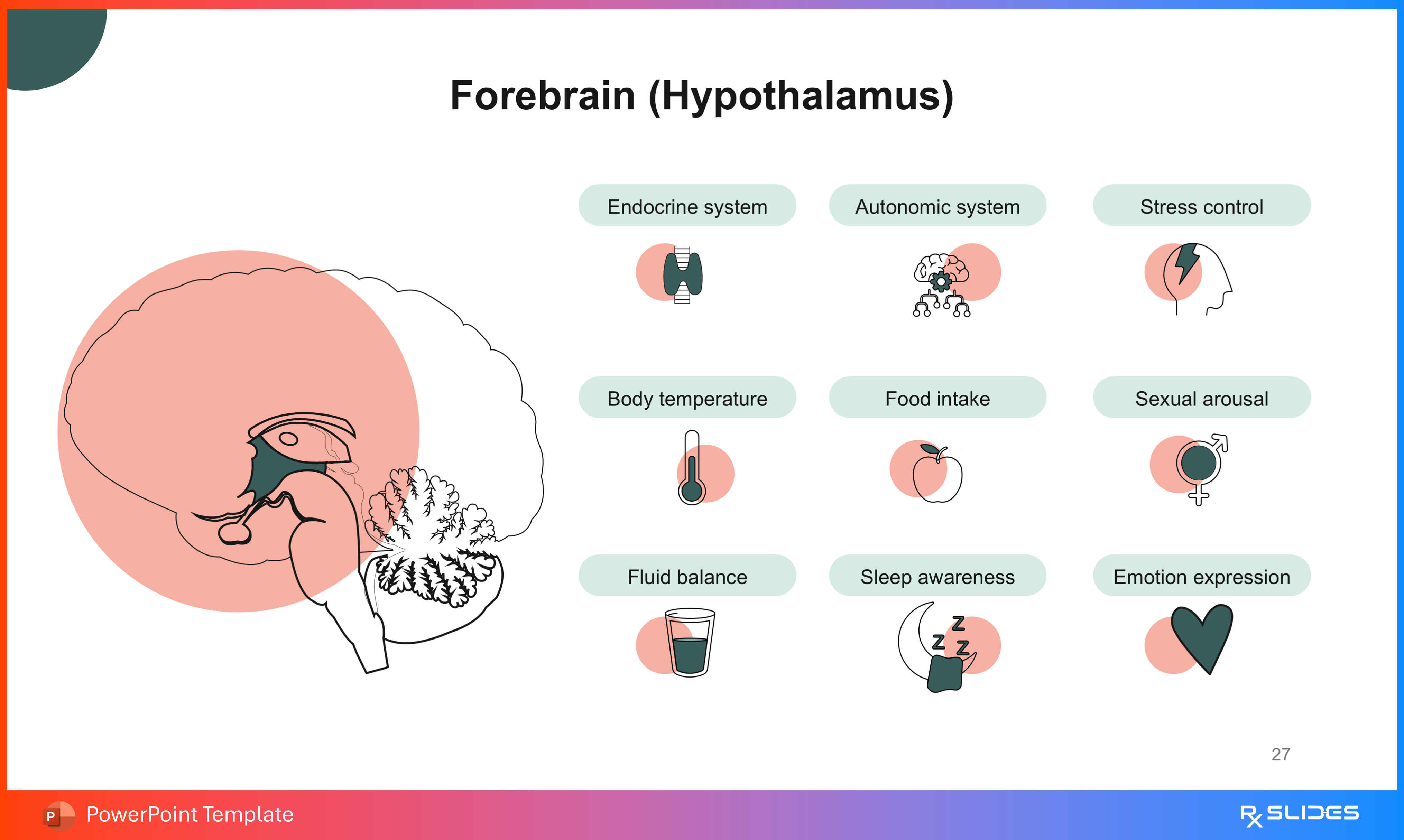
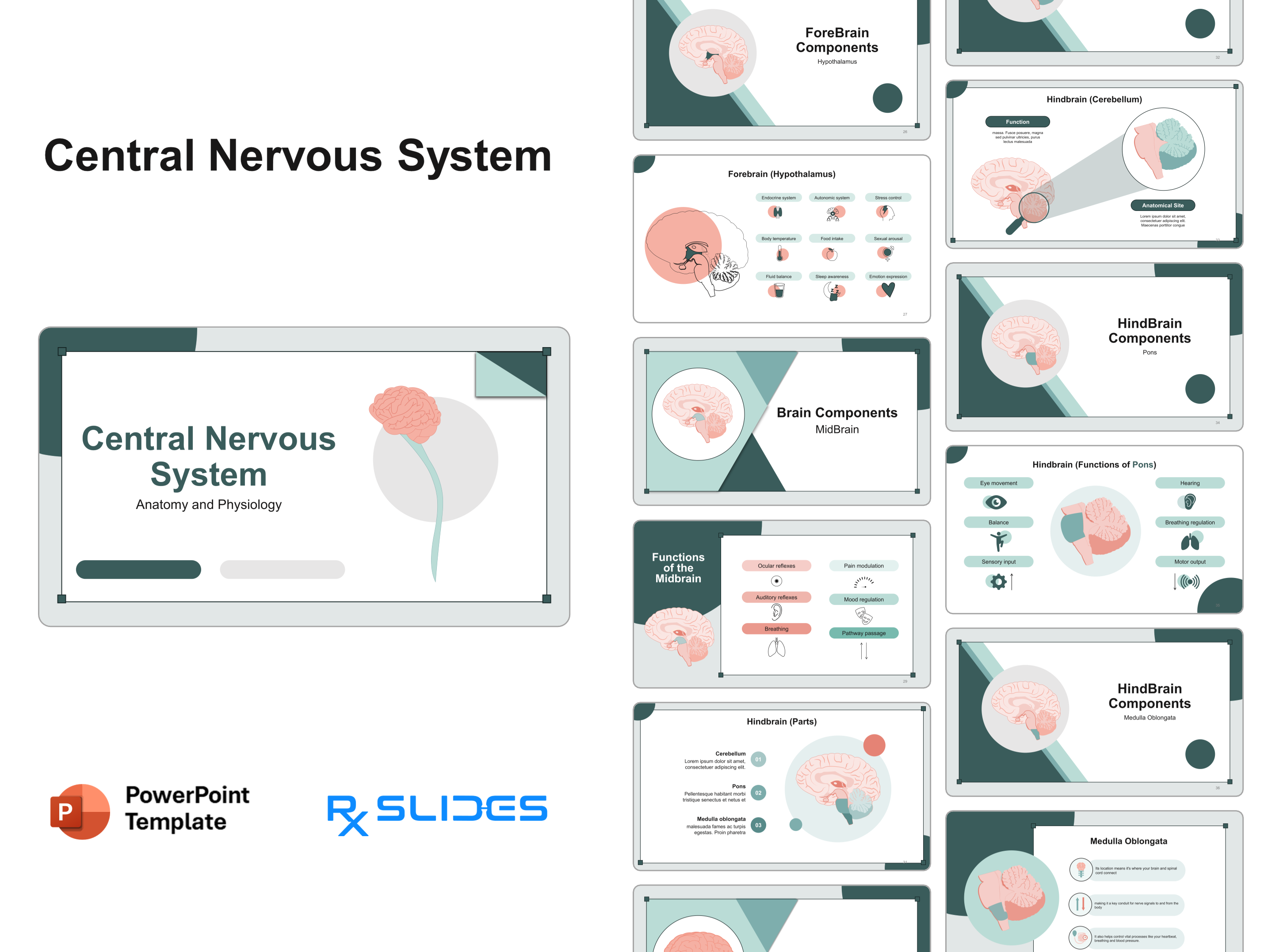
visualizes the nine key autonomic functions controlled by the hypothalamus. Simple, relatable icons (such as a thermometer for temperature or a heart for stress) make these physiological processes easy to memorize.
Hindbrain: Cerebellum Detail
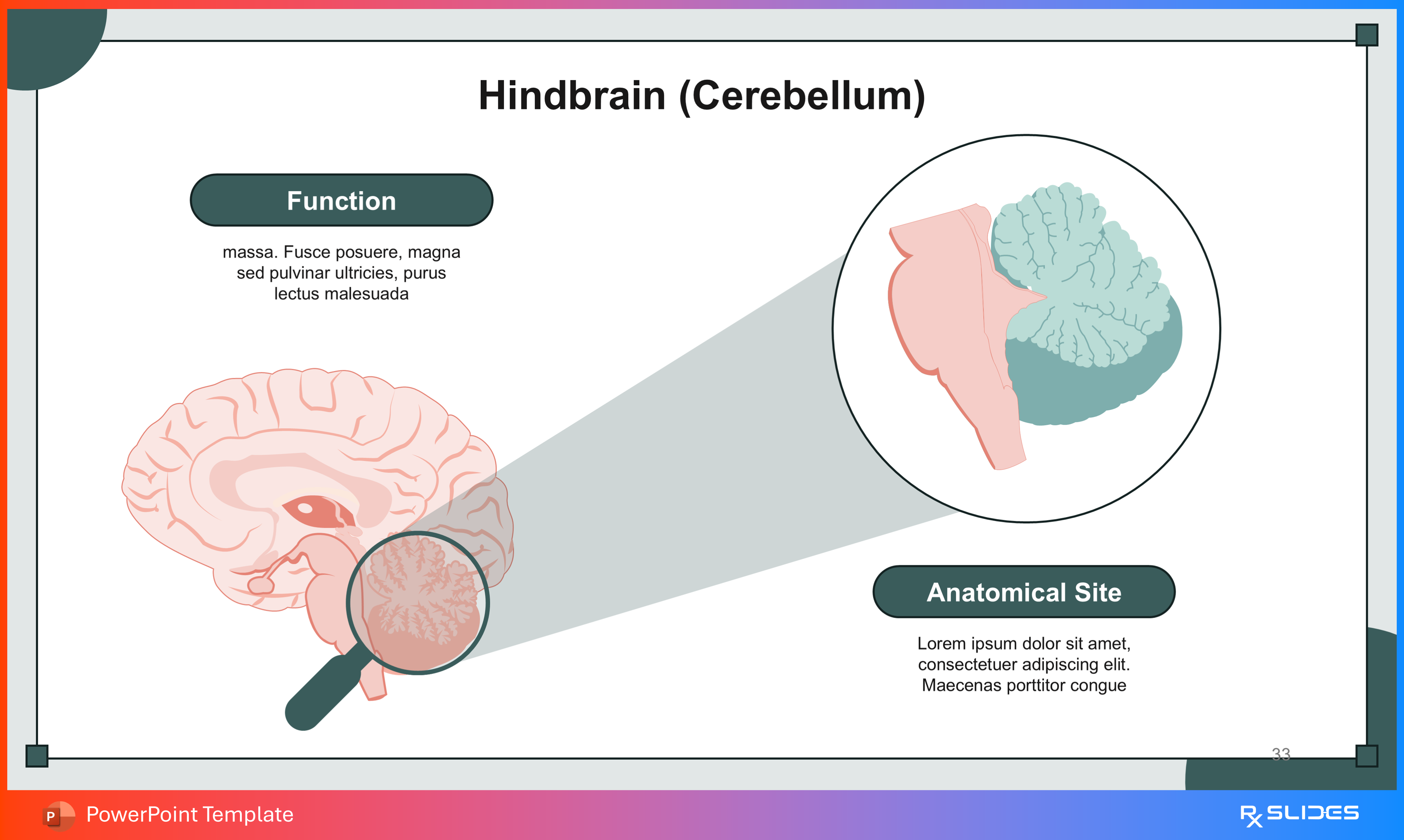
Focused on the "Little Brain," this slide uses a magnifying glass effect to isolate the cerebellum from the rest of the brain structure, allowing for a focused discussion on its anatomy and function.
Spinal Cord Cross-Section
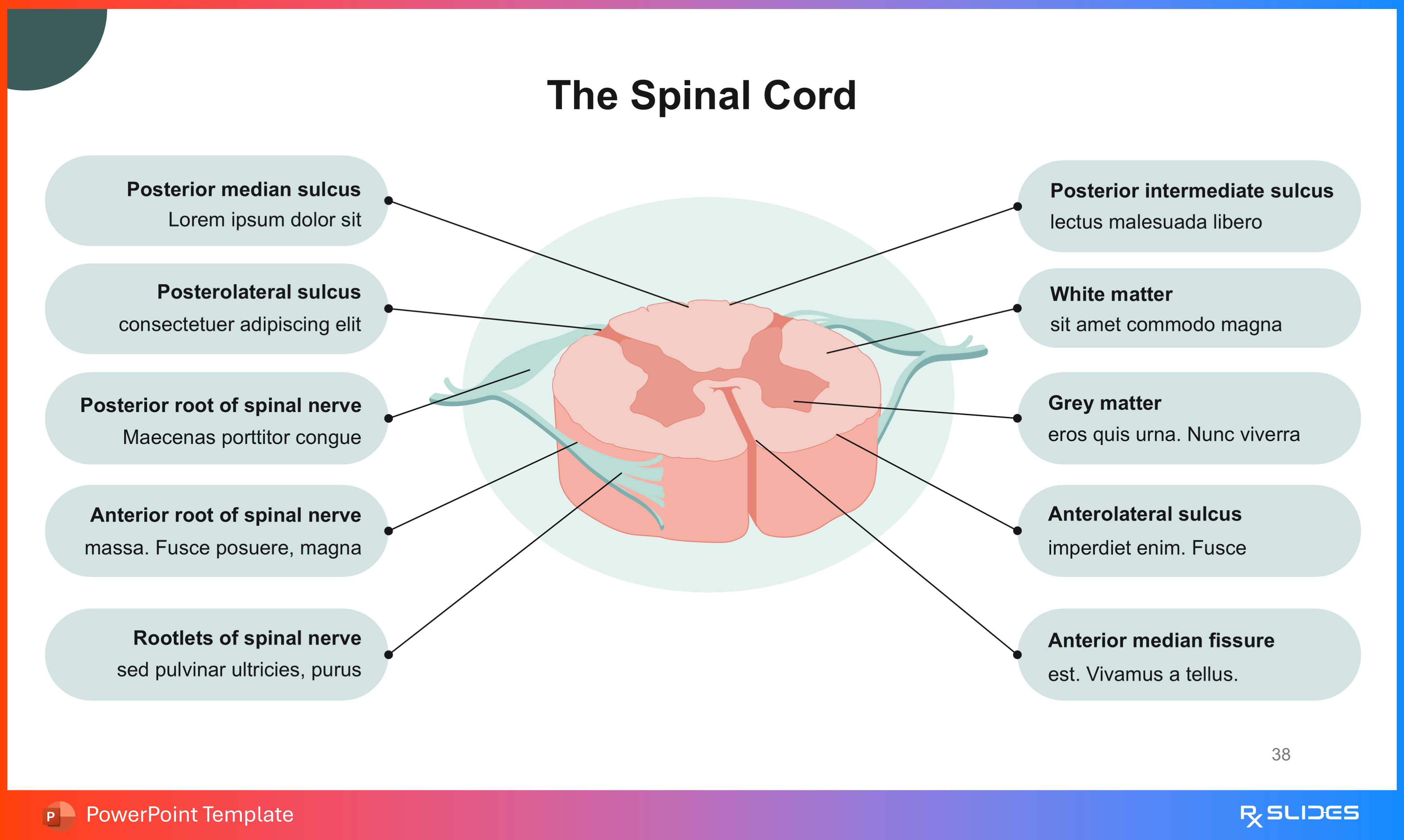
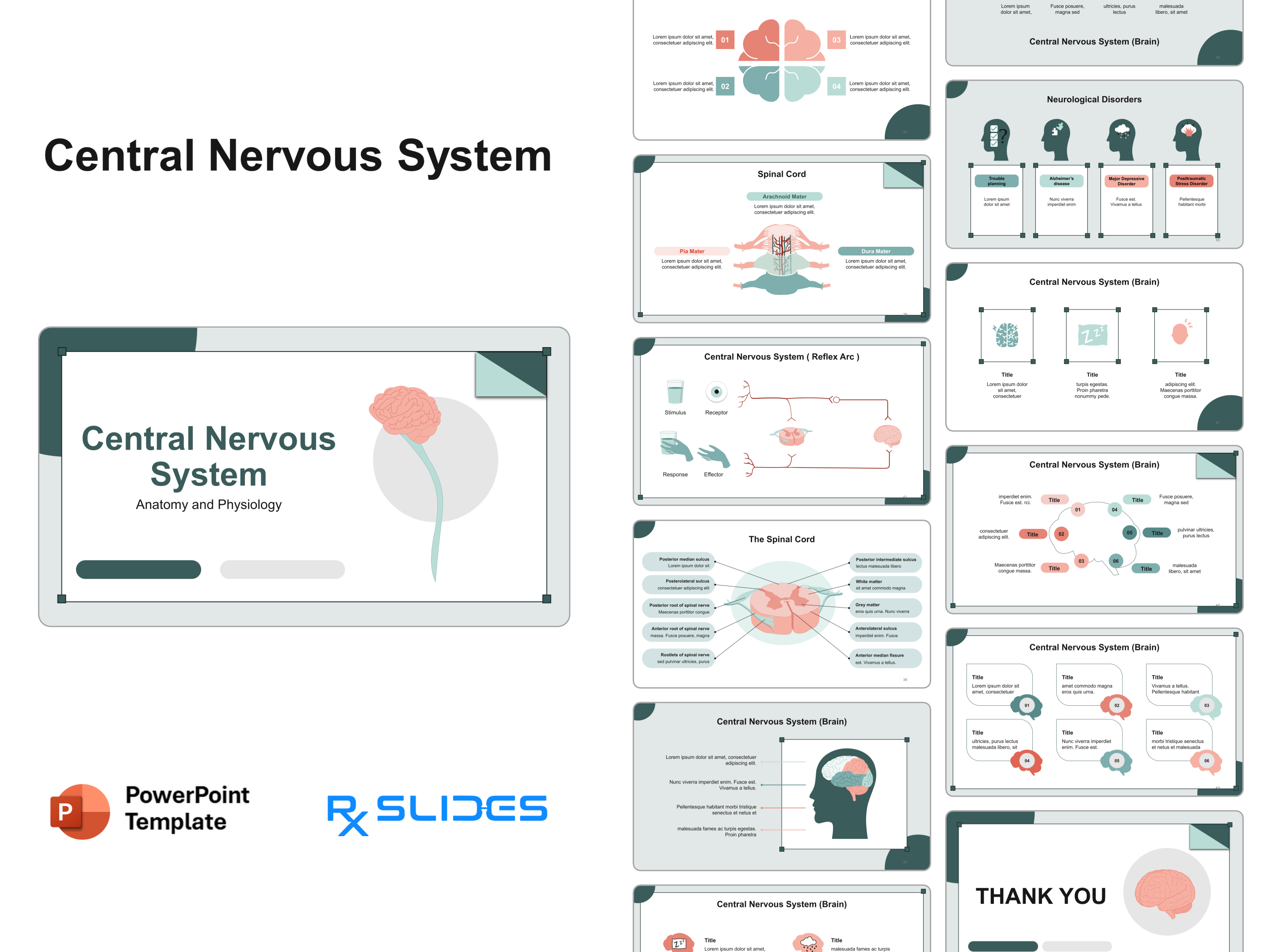
A highly detailed, professional diagram labeling the complex internal anatomy of the spinal cord. It identifies ten key structures, including white and gray matter and nerve roots, simplifying complex cross-sectional anatomy.
Physiology: The Reflex Arc
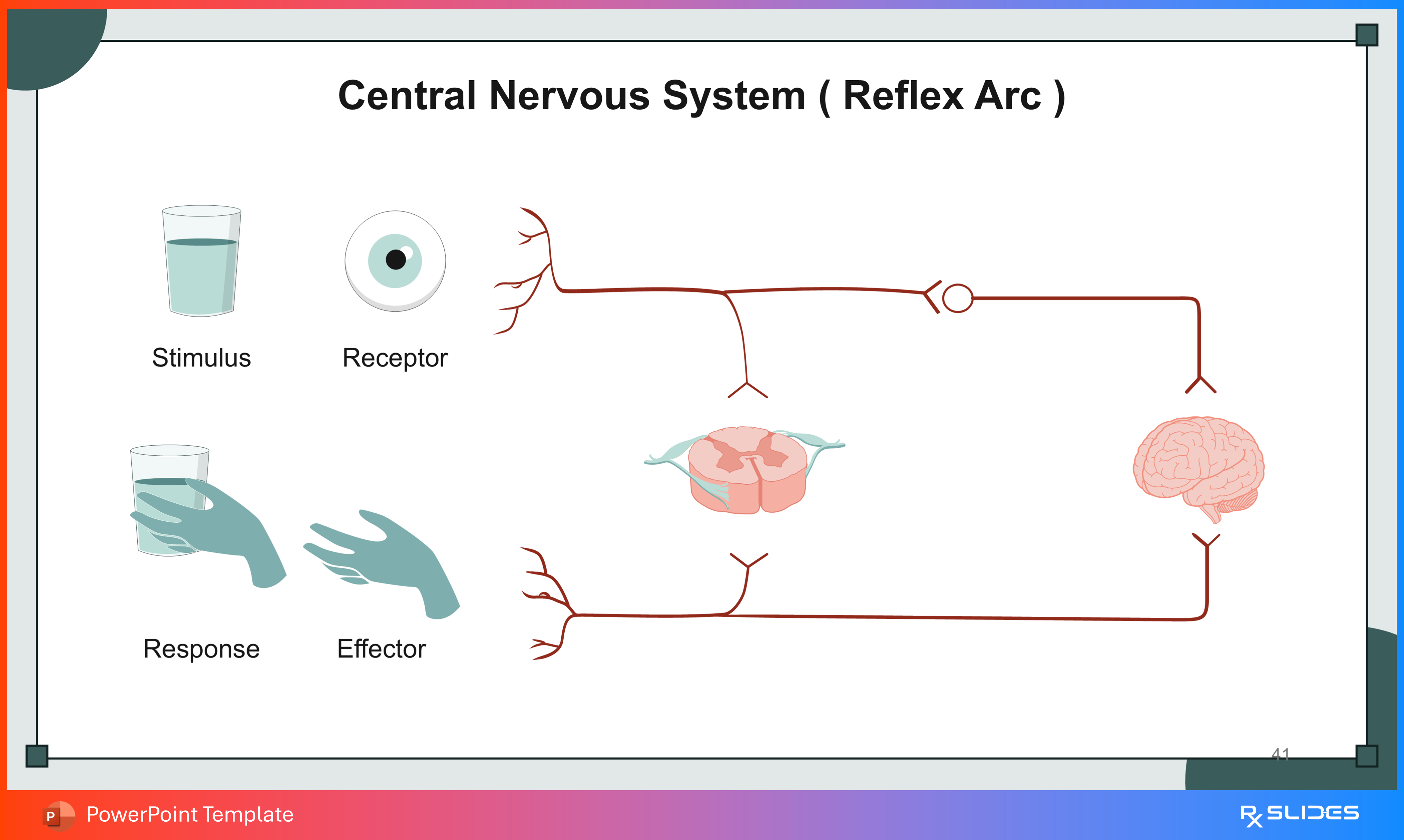
Explains the complete path of a nerve impulse during a reflex action. The visual diagram maps the journey from stimulus to response via the spinal cord, providing an immediate, comprehensive view of this physiological mechanism.
Comprehensive Content Overview
The featured slides are just a glimpse of this extensive presentation deck. With 40 additional professional slides, this template serves as a complete neurological toolkit, covering every anatomical layer in detail:
- In-Depth Forebrain Analysis: Goes beyond the basics with detailed breakdowns of the cerebrum (hemispheres, gyri & sulci, and cortexes), thalamus, and hypothalamus.
- Complete Brainstem Coverage: Dedicated sections for the midbrain, pons, and medulla oblongata, ensuring no part of the brainstem is overlooked.
- Spinal Anatomy & Protection: Comprehensive visuals explaining the meninges (dura, arachnoid, and pia mater), spinal cord coverings, and detailed cross-sections.
- Physiology & Action: Dynamic diagrams illustrating the Reflex Arc (Stimulus to response) and functional areas for sleep, memory, and stress.
- Clinical Applications: Specialized slides for discussing Neurological Disorders (e.g., Alzheimer's, PTSD) and diagnostic concepts.
- Versatile Visuals: A wide array of infographics, comparison tables, icon lists, and timeline slides to structure your medical lecture perfectly.
Features of the Template
- 100% editable PowerPoint template.
- Editable colors, you can change according to your presentation style and company branding guidelines.


.avif)
.avif)
.avif)