Insulin PowerPoint Template

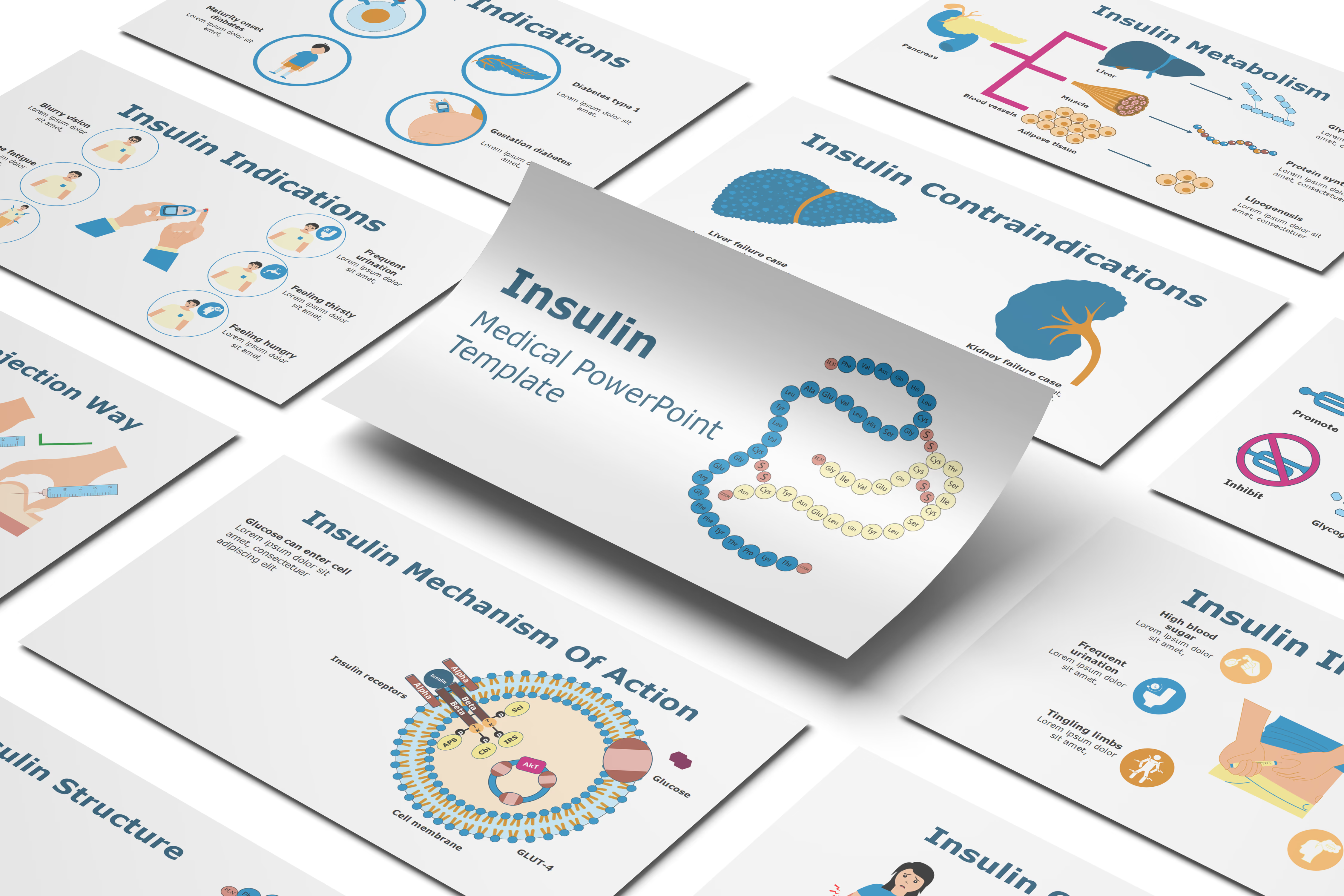




Template Preview
Designed for healthcare professionals creating clear and structured medical presentations.
Ideal for doctors, medical educators, and pharmaceutical teams preparing lectures, clinical education, product presentations, and training.
Fully editable in PowerPoint, allowing you to customize diagrams, charts, and slide layouts with your own medical content
Ready-to-use presentation structure that saves time and helps you build professional healthcare presentations quickly.
Fully Animated
Built-in animations help you present medical information clearly and make complex concepts easier to understand.
Editable Colors and Shapes
Editable colors and shapes help you easily customize the slides to match your content and presentation style, just drag and drop your content.
Professional medical layouts
Professional medical layouts help you organize clinical information, medical data, and treatment insights in a clear and structured way.

Created by Medical Professionals
This template prioritizes medical accuracy, clarity, and real-world usability. Each slide is designed with a medical audience in mind, helping you present clinical information, data, and treatment insights in a way that is structured, credible, and easy for healthcare professionals to understand.
Pharmaceutical Product & Medical Affairs Presentations
Medical Affairs teams supporting an insulin analog or broader diabetes portfolio can put this 60-plus-slide Insulin template to work as scientific-exchange groundwork, covering the GLUT4-mediated glucose-uptake mechanism and the receptor-binding cascade from autophosphorylation through Akt activation, without referencing a specific brand. Medical Science Liaisons can reference the five-analog-category content, rapid, short, intermediate, long-acting, and premixed, when a scientific exchange conversation calls for context on matching insulin type to a patient's glycemic pattern. This is receptor-level cell biology, not a promotional angle, and the customer's own medical and compliance team still has final say over how it's used with any audience. Endocrinology and primary care teams gain a consistent scientific reference spanning mechanism, administration routes, and safety.
Medical Congress & Scientific Conference Presentations
Endocrinologists preparing a conference session can build around this Insulin template's receptor-signaling animation, tracing insulin binding through IRS phosphorylation and Akt activation to GLUT4-mediated glucose uptake, rather than assembling cell-signaling diagrams independently. The subcutaneous-versus-intravenous administration comparison gives a speaker a ready framework for a route-of-administration discussion spanning routine management to emergency glycemic control. A Key Opinion Leader presenting at an endocrinology conference can pair the existing pharmacokinetic content with their own institutional dosing data. The type-1-versus-type-2 indication comparison keeps the discussion clinically current for a specialist audience.
Medical Training for Pharmaceutical & Life Sciences Companies
Endocrinology and primary care training teams onboarding new sales reps can structure introductory sessions around this Insulin template's hormone-structure foundation, the 51-amino-acid polypeptide with its two disulfide-linked chains, before moving into the drug-specific receptor-binding mechanism. New hires get a visual reference for the five insulin-analog categories alongside the brand landscape, NovoMix, Humalog Mix, and Toujeo, across three different manufacturers. The type-1-versus-type-2-diabetes symptom comparison gives trainees a structured reference for how presenting symptoms differ by diabetes type. New reps finish training able to explain why route of administration, subcutaneous versus intravenous, changes depending on clinical urgency.
eLearning & SCORM Training Modules
Pharmacy schools and endocrinology fellowship programs building a diabetes pharmacology module can customize this Insulin template with their own case data, then convert the finished presentation into a SCORM-compliant module for their learning management system when self-paced study fits the curriculum better. The receptor-signaling and GLUT4-mechanism animations translate naturally into interactive checkpoints within a broader endocrine pharmacology course. When a program needs a narrower scope, such as the pharmacokinetics section alone or a version tailored for nursing versus pharmacy learners, the RxSlides team can adjust the template's coverage and branding. A presentation built entirely from scratch remains an option through the RxSlides team whenever a training objective calls for something the catalog doesn't yet include.
Medical & Healthcare Education
Medical and pharmacy school faculty teaching endocrine pharmacology can use this template's receptor-signaling slides to establish how insulin triggers glucose uptake at the cellular level before introducing its clinical indications. The five-analog-category framework gives students a clear structure for understanding how onset and duration differ across rapid, short, intermediate, and long-acting formulations. The type-1-versus-type-2 symptom comparison connects classroom endocrinology to the differential-diagnosis reasoning students will apply in practice. Students leave with a structured understanding of insulin's mechanism, administration, and the pharmacokinetics that guide dosing decisions.
The Insulin PowerPoint template opens with cover slides and an editable table of contents before illustrations define insulin as a peptide hormone produced by pancreatic beta cells that regulates blood glucose and supports protein synthesis, lipolysis, and electrolyte balance. Further slides distinguish rapid acting, short acting, intermediate acting, long acting, and premixed insulin analogs, and a structural diagram shows insulin as a polypeptide of 51 amino acids arranged in two chains connected by disulfide bonds.
Medical icons and illustrations visualize the indications of insulin through the symptoms of type 1 diabetes, including polyuria, polydipsia, polyphagia, and weight loss, and type 2 diabetes, including fatigue, blurred vision, frequent infections, and slow healing wounds. A separate slide illustrates contraindications such as liver failure, kidney failure, cresol sensitivity, and hypokalemia in this editable medical presentation template.
A pharmacodynamics slide explains how synthetic insulin compensates for natural insulin by binding to receptors and enabling glucose entry into the cell. Establishing this foundation first gives educators a shared reference point before an animated mechanism traces insulin binding to receptors on muscle, fat, and liver cells, triggering autophosphorylation and a signaling cascade through IRS, Cbl, APS, and Akt that activates GLUT4 and converts glucose into stored glycogen.
Animated graphs compare the absorption profiles of subcutaneous injection and inhalation across insulin types, before slides cover distribution through receptor binding, metabolism in the liver and kidney with a five to ten minute half life, and excretion through the urine. The presentation template closes with illustrations of subcutaneous and intravenous administration routes, rounding out a set of editable PowerPoint diagrams for diabetes pharmacology education.
Ready To Transform Your Presentation ?
Pay once, use forever